What Do Molars Do? Their Role in Chewing and Common Molar Problems
The correct quiz answer is A: Molars. Molars are the large teeth at the back of the mouth. Their broad chewing surfaces and raised points, called cusps, help crush and grind food into smaller pieces. Incisors at the front of the mouth are mainly used for biting and cutting food.
Key Takeaways:
The correct quiz answer is A: Molars.
Molars crush and grind food to support efficient chewing and swallowing.
Incisors mainly cut and bite food; canines help grip and tear it, while premolars also help crush and grind.
Molars can be affected by cavities, cracks, gum disease, and wisdom tooth complications.
Brush twice daily with fluoride toothpaste and clean between teeth daily.
Persistent tooth pain, pain when biting, or swelling warrants dental evaluation. Difficulty breathing or swallowing requires emergency medical attention.
This article explains how molars work, how they differ from other teeth, common molar problems, and ways to protect them.
Medical information notice: This article provides general educational information and does not replace individualized examination, diagnosis, or treatment from a licensed dental professional.
Quiz Answer: Which Teeth Grind Food?
Molars are the correct answer because their wide chewing surfaces are designed to crush and grind food during repeated jaw movements. They help break food into smaller particles that can be swallowed more easily.
Incisors have a different primary role. Located at the front of the mouth, they help bite and cut food into manageable pieces. Canines help grip and tear food, while premolars also contribute to crushing and grinding.
Each tooth type contributes to chewing, but molars perform much of the heavy grinding at the back of the mouth.
What Are Molars, and Where Are They Located?
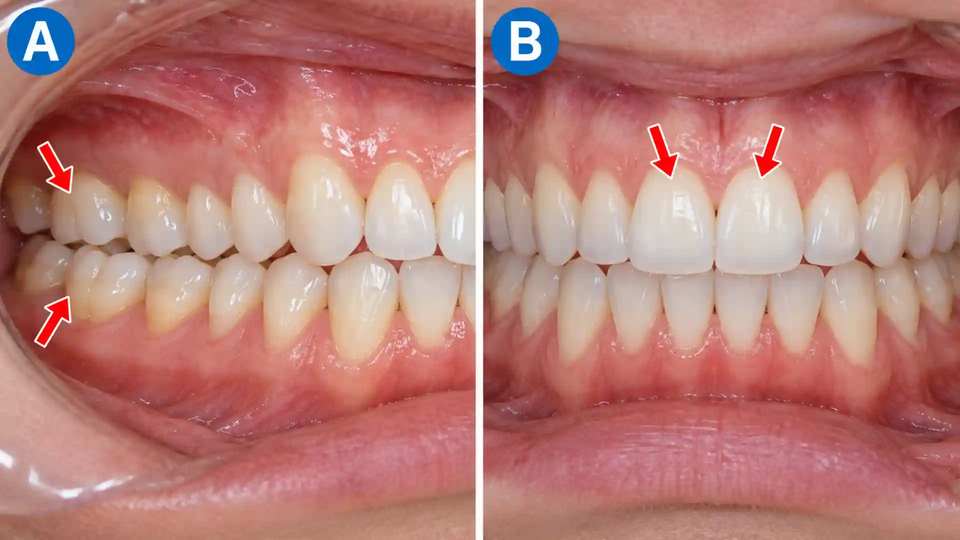
Molars are the large teeth positioned at the back of the mouth, behind the premolars. Their broad chewing surfaces and raised points, called cusps, make them well suited to crushing and grinding food.
Most adults can have up to 12 permanent molars, including four wisdom teeth. The actual number varies because some people never develop all four wisdom teeth or have had molars removed.
Children have primary molars, commonly called baby molars. These teeth help children chew while their jaws develop and are eventually replaced by permanent premolars. The first permanent molars usually emerge around age six, behind the baby teeth rather than replacing them.
How Do Molars Differ From Incisors and Other Teeth?
Each tooth type contributes to chewing, but its shape and position influence its main function.
Incisors sit at the front of the mouth and are mainly used for cutting and biting food. Canines are located beside the incisors and help grip and tear food. Premolars sit between the canines and molars and help crush and grind. Molars are at the back of the mouth and provide broad surfaces for thorough crushing and grinding.
The key distinction for this quiz is that incisors cut food, while molars perform much of the grinding.
What Do Molars Do During Chewing?
Molars help break food down mechanically. They work with the jaw muscles, tongue, saliva, and other teeth to turn food into smaller particles that can be swallowed more easily.
The tongue positions food between the upper and lower teeth, while repeated jaw movements bring the chewing surfaces together. Saliva moistens the food to form a soft mass called a bolus. The bolus can then be swallowed and continue through the digestive system.
Healthy molars also support comfortable eating. When a molar is painful or missing, a person may shift chewing to the opposite side, but this does not correct the underlying dental problem.
What Are the Different Types of Molars?
Permanent molars are generally divided into first, second, and third molars. First permanent molars typically erupt around ages six to seven and help establish the back portion of the permanent bite. They appear behind the baby teeth rather than replacing them.
Second permanent molars generally emerge during early adolescence. Their position behind the first molars can make them difficult to clean thoroughly.
Third molars are commonly called wisdom teeth. They usually emerge in late adolescence or early adulthood, although timing varies. Some people have all four, fewer than four, or none. Wisdom teeth do not automatically require removal; a dentist evaluates their position, symptoms, surrounding tissues, and potential effects on neighboring teeth.
What Common Problems Affect Molars?
Molars experience repeated chewing forces and have grooves that can be difficult to clean thoroughly. These features can make them vulnerable to several dental problems.
Tooth decay develops when bacteria in dental plaque produce acids from sugars and starches. The acids remove minerals from enamel, and repeated mineral loss can eventually create a cavity. Plaque may remain in deep molar grooves or between neighboring teeth.
Molars can also crack under chewing forces, trauma, or pressure from habits such as grinding. Gum disease may affect the tissues supporting molars, while partially erupted or impacted wisdom teeth can trap food and bacteria around the gum tissue.
What Can Molar Pain Mean?
Molar pain can have several causes, and the location of the pain does not always identify the exact problem. Possible causes include tooth decay, a crack, inflammation inside the tooth, gum disease, or a wisdom tooth complication.
Brief sensitivity may be associated with exposed dentin or early decay. Sharp pain during biting can occur with a crack or damaged filling. Lingering temperature sensitivity or spontaneous pain may indicate deeper irritation involving the dental pulp. These patterns are clues, not definitive diagnoses.
If molar pain persists, arrange a dental examination rather than relying only on temporary pain relief.
How Do Dentists Identify the Cause of Molar Pain?
Dentists combine a patient's symptoms with clinical findings rather than diagnosing a molar problem from pain alone. They may ask when the pain began, whether it occurs during chewing, how long temperature sensitivity lasts, and whether there has been recent dental work or an injury.
The examination may include checking for visible decay, cracks, damaged fillings, swelling, gum inflammation, and food trapped around the tooth. Depending on the suspected condition, a dentist may test the tooth's response to cold, gently tap it, or perform a controlled biting test. Dental X-rays may help reveal decay between teeth, changes around a root, bone loss, or the position of an impacted wisdom tooth.
No single test necessarily provides the complete answer. The dentist interprets symptoms, examination findings, and any imaging together.
How Are Molar Problems Treated?
Treatment depends on the diagnosis and how much healthy tooth structure remains. Selected early areas of mineral loss may be managed with fluoride and preventive changes. A cavity that has formed may require a filling. More extensive damage may call for an inlay, onlay, or crown, depending on the tooth's condition.
Root canal treatment may be considered when the dental pulp is irreversibly inflamed or infected and the tooth can be saved. Extraction may be considered when a tooth cannot be predictably restored or when another clinical indication makes removal appropriate.
A filling is not automatically sufficient for every cavity, and a crown is not automatically necessary for every damaged molar. A dentist should explain the reason for the proposed treatment, expected benefits, and reasonable alternatives.
How Are Gum Disease and Molar Problems Connected?
Plaque can accumulate along the gumline and between molars, where toothbrush bristles may not reach effectively. Early gum disease, called gingivitis, can cause redness, swelling, tenderness, and bleeding during brushing or flossing.
If gum disease progresses to periodontitis, the tissues and bone supporting the teeth can become damaged. Affected molars may develop deeper periodontal pockets, gum recession, mobility, or discomfort during chewing.
Care depends on the condition's severity. It may include daily plaque removal, professional cleaning, or periodontal treatment such as scaling and root planing. A dental professional assesses the gums and supporting tissues before recommending treatment.
How Can You Protect Your Molars?
A consistent preventive routine helps reduce the risk of cavities and gum disease, although it cannot eliminate every dental problem.
Brush twice daily for two minutes with fluoride toothpaste. Clean the chewing surfaces of every molar, including the teeth at the very back of the mouth, and use a soft-bristled toothbrush that fits comfortably around those areas. Clean between teeth daily with floss or another suitable interdental cleaner.
Limit frequent exposure to sugary foods and drinks, avoid chewing ice or using teeth to open packaging, and attend dental examinations at intervals recommended for your needs. Ask a dentist whether dental sealants are appropriate, particularly for children and adolescents. If you grind your teeth, ask whether a night guard is suitable.
When Should You Seek Dental Care for a Molar Problem?
Persistent tooth pain, pain when biting, ongoing sensitivity, gum swelling, or a damaged molar should be evaluated by a dental professional. Do not delay an examination simply because pain temporarily improves.
Swelling with fever or worsening pain may require urgent dental assessment. Do not attempt to drain an abscess or place aspirin directly against the tooth or gums.
If oral swelling causes difficulty breathing or swallowing, or if swelling spreads rapidly into the neck or floor of the mouth, seek emergency medical care immediately. An online quiz cannot determine the cause or severity of a dental problem.
Frequently Asked Questions About Molars
How many molars do adults have?
Adults can have up to 12 permanent molars, including first, second, and third molars. The total varies because some people develop fewer wisdom teeth or have had molars removed.
Can you chew normally without your molars?
Some chewing remains possible with premolars and other teeth, but losing molars can reduce chewing efficiency and change how biting forces are distributed. A dentist can discuss whether replacing missing molars would improve function.
Why do molars get cavities?
Molars have grooves and pits that can retain plaque, and their position may make thorough cleaning more difficult. Fluoride toothpaste, daily cleaning between teeth, dental examinations, and appropriate sealants can help reduce decay risk.
Does every painful molar need a root canal?
No. Molar pain can result from a cavity, cracked tooth, gum inflammation, or wisdom tooth complication. A dentist must evaluate the tooth before recommending treatment.
When should I see a dentist for molar pain?
Arrange an examination for persistent pain, pain when biting, swelling, ongoing sensitivity, or a damaged tooth. Difficulty breathing or swallowing requires emergency medical attention.
Sources
- National Institute of Dental and Craniofacial Research (NIDCR). Tooth Decay. https://www.nidcr.nih.gov/health-info/tooth-decay
- National Institute of Dental and Craniofacial Research (NIDCR). Dental Fillings. https://www.nidcr.nih.gov/health-info/dental-fillings
- Centers for Disease Control and Prevention (CDC). About Periodontal (Gum) Disease. https://www.cdc.gov/oral-health/about/gum-periodontal-disease.html
- American Association of Endodontists (AAE). Root Canal Explained. https://www.aae.org/patients/root-canal-treatment/what-is-a-root-canal/root-canal-explained/
- American Dental Association (ADA), MouthHealthy. Scaling and Root Planing. https://www.ada.org/sitecore/content/ADA-Organization/ADA/MouthHealthy/home/all-topics-a-z/scaling-and-root-planing
- American Dental Association (ADA), MouthHealthy. Wisdom Teeth. https://www.ada.org/sitecore/content/ADA-Organization/ADA/MouthHealthy/home/all-topics-a-z/wisdom-teeth
- American Association of Endodontists (AAE). Tooth Pain. https://www.aae.org/patients/dental-symptoms/tooth-pain/