How Dentists Remove Tartar: Professional Teeth Cleaning and Treatment Options
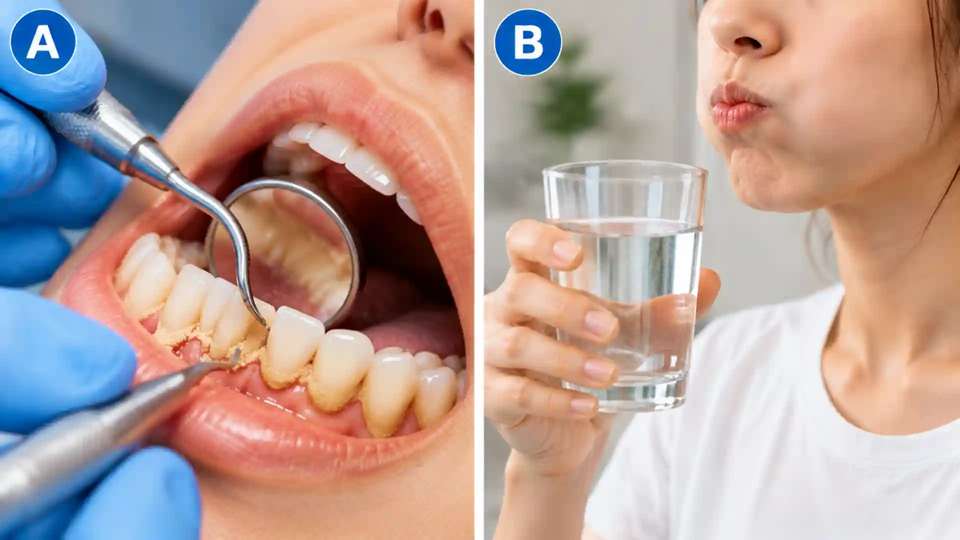
The correct quiz answer is A: Professional dental cleaning. Tartar, also called dental calculus, is hardened dental plaque that cannot be reliably removed with ordinary brushing or flossing. Dentists and dental hygienists use specialized instruments to remove these deposits and help protect tooth and gum health.
Key Takeaways:
Tartar forms when accumulated plaque hardens through mineralization.
Ordinary brushing, flossing, and rinsing with water cannot reliably remove established tartar.
Professional dental cleaning uses specialized instruments to remove hardened deposits.
Routine cleaning and deep cleaning serve different purposes.
Scaling and root planing may be recommended when periodontal disease requires treatment beneath the gumline.
Brushing twice daily with fluoride toothpaste and cleaning between teeth daily help reduce new plaque buildup.
The appropriate treatment depends on the location of tartar, gum health, and clinical examination findings.
This guide explains why tartar cannot be removed reliably at home, how professional removal works, when deep cleaning may be necessary, and how to reduce future buildup.
Medical information notice: This article provides general educational information and does not replace individualized examination, diagnosis, or treatment from a licensed dental professional.
Quiz Answer: How Is Hardened Dental Plaque Removed?
Professional dental cleaning is the correct answer because tartar is firmly attached, mineralized plaque. A dentist or dental hygienist uses specialized instruments to remove the deposits from tooth surfaces.
Rinsing with water may help wash away some loose food particles, but it cannot reliably remove hardened tartar. Brushing and flossing are important for removing soft plaque and preventing additional buildup, but they cannot reliably eliminate deposits that have already hardened.
The type of professional treatment depends on where the tartar is located and whether gum disease is present. Routine cleaning is appropriate for many accessible deposits, while scaling and root planing may be needed for certain cases of periodontitis.
What Is Tartar, and Why Can't You Remove It at Home?
Tartar is dental plaque that has hardened through mineralization. Plaque is a sticky biofilm containing bacteria that continually forms on tooth surfaces. When plaque is not removed regularly, minerals in saliva can become incorporated into the deposits, causing some of them to harden into tartar.
Fresh plaque can generally be disrupted through effective brushing and cleaning between teeth. Once plaque hardens, ordinary toothbrushes and dental floss cannot reliably remove the deposit.
Tartar commonly accumulates along the gumline, behind the lower front teeth, and around other areas that are difficult to clean. Its color may range from yellow to tan or brown, but appearance alone cannot determine the extent of buildup or whether gum disease is present.
Professional removal addresses established deposits. Daily plaque control remains necessary because new plaque continues to form after a cleaning.
What Is the Difference Between Dental Plaque and Tartar?
Plaque and tartar are related, but they differ in texture and how they can be removed.
Dental plaque is a soft bacterial biofilm that forms naturally on tooth surfaces. With effective brushing and daily interdental cleaning, it can generally be removed at home.
Tartar is plaque that has hardened after minerals become incorporated into the deposit. It adheres firmly to tooth surfaces and may develop above or below the gumline. Ordinary home cleaning cannot reliably remove established tartar.
The distinction matters because the appropriate response is different. Soft plaque calls for consistent daily cleaning, while hardened tartar requires professional removal. Both plaque and tartar can contribute to conditions that make gum health more difficult to maintain.
How Can Tartar Affect Your Teeth and Gums?
Tartar creates a rough surface where additional plaque can accumulate. Bacteria in plaque can trigger inflammation in the surrounding gum tissue.
Early gum disease, called gingivitis, may cause redness, swelling, tenderness, or bleeding during brushing and cleaning between teeth. If periodontal disease progresses, the tissues and bone supporting the teeth can become damaged.
Removing tartar helps eliminate hardened deposits that can retain additional plaque, but tartar removal does not automatically reverse existing bone loss or resolve every cause of gum disease.
The appropriate treatment depends on the condition of the gums, the location of the deposits, and whether supporting tissues have already been affected. Persistent bleeding, gum recession, or loose teeth warrant professional dental evaluation.
How Do Dentists Remove Tartar During Professional Dental Cleaning?
Professional tartar removal generally begins with an examination of the teeth, gums, and visible deposits. The dentist or dental hygienist considers the location and extent of buildup and whether signs of gum disease suggest that additional assessment is needed.
Dental professionals may use ultrasonic scalers, hand instruments, or a combination of both.
Ultrasonic scalers use rapid vibrations and water irrigation to help loosen deposits from tooth surfaces. Hand scalers and curettes allow the professional to remove deposits from specific areas and refine cleaning around tooth surfaces and the gumline.
After scaling, the dental professional may polish the teeth to remove selected surface stains and smooth cleaned surfaces when appropriate. Polishing is not the same as tartar removal; hardened deposits must first be removed using appropriate scaling instruments.
The appointment may conclude with advice about brushing, cleaning between teeth, and preventing new deposits. If gum disease is present, the dental team may recommend additional periodontal treatment or follow-up visits.
Routine Dental Cleaning vs. Deep Cleaning: Which Do You Need?
Routine professional dental cleaning and deep cleaning serve different purposes. The appropriate treatment depends on the condition of the gums and the location of the deposits, not simply how much tartar is visible.
Routine professional cleaning removes plaque and tartar from accessible tooth surfaces and around the gumline. It is commonly used for preventive care and may be appropriate for people with gingivitis when there is no significant supporting-tissue damage requiring deeper treatment.
Deep cleaning, also called scaling and root planing, treats affected areas beneath the gumline when periodontitis requires more extensive care. The procedure removes deposits from affected tooth and root surfaces within periodontal pockets.
A dental professional evaluates gum health, periodontal pocket measurements, inflammation, and other clinical findings before recommending deeper treatment. Visible tartar alone does not automatically mean that deep cleaning is necessary.
Reference: American Dental Association, Scaling and Root Planing: https://www.mouthhealthy.org/all-topics-a-z/scaling-and-root-planing/.
What Happens During Scaling and Root Planing?
Scaling and root planing is a nonsurgical periodontal treatment used to manage periodontitis when deposits extend beneath the gumline and require treatment beyond routine cleaning.
During scaling, the dental professional removes plaque and tartar from affected tooth and root surfaces, including areas within periodontal pockets. Root planing cleans affected root surfaces where appropriate to remove deposits and support periodontal healing.
Local anesthetic may be used depending on the extent of treatment, the patient's sensitivity, and comfort needs. Treatment may require more than one appointment, depending on the distribution and severity of periodontal disease.
Temporary gum tenderness, mild bleeding, or sensitivity to hot and cold may occur after treatment. The dental team can explain expected recovery and recommended follow-up care.
Scaling and root planing can help control periodontal disease and reduce inflammation, but it cannot guarantee that lost supporting bone or attachment tissue will return. Continued home care and professional maintenance may be necessary.
Can Water, Mouthwash, or Home Remedies Remove Tartar?
Rinsing with water can help wash away some loose food particles and support hydration, but it cannot reliably remove hardened tartar attached to tooth surfaces.
Ordinary mouthwash also does not reliably dissolve established tartar. Some mouthwashes may have a role in an oral hygiene routine, depending on their ingredients and purpose, but they do not replace brushing, cleaning between teeth, or professional tartar removal.
Household remedies such as vinegar cannot reliably remove established tartar. Acidic substances may erode enamel, while abrasive or improperly used products may damage oral tissues.
Avoid using sharp household objects, metal tools, or unregulated dental instruments to scrape tartar from your teeth. These methods can injure gum tissue, scratch tooth surfaces, or damage existing dental work.
If you notice hard deposits that remain after brushing, arrange a professional dental appointment rather than attempting to remove them yourself.
How Much Does Professional Tartar Removal Cost?
The cost of tartar removal depends on the type of cleaning, the amount and location of deposits, the dental practice, geographic location, and insurance benefits.
Routine professional cleaning and deep cleaning involve different procedures. Scaling and root planing may cost more because it treats affected areas beneath the gumline and may require additional appointment time or multiple visits.
Before agreeing to treatment, ask the dental office whether the estimate covers routine cleaning, scaling and root planing, or another procedure. For deep cleaning, ask which areas require treatment, how many visits are expected, and whether follow-up periodontal maintenance is included.
Dental insurance may cover routine preventive cleaning and may provide benefits for periodontal treatment, but coverage varies by plan. Deductibles, annual maximums, frequency limits, network restrictions, and preauthorization requirements may affect out-of-pocket costs.
Request an itemized estimate and check your benefits with the insurer. A pretreatment estimate may help clarify expected costs, although it does not guarantee final insurance payment.
The appropriate procedure should be based on the clinical findings rather than price alone.
How Can You Prevent Tartar Buildup From Returning?
Preventing tartar starts with removing plaque before it hardens. Consistent home care reduces the amount of plaque available to mineralize, although it cannot guarantee that tartar will never develop.
Brush twice daily for two minutes with fluoride toothpaste and a soft-bristled toothbrush. Clean along the gumline, the chewing surfaces, and the back surfaces of the teeth.
Clean between your teeth every day with dental floss or another suitable interdental cleaner. A toothbrush may not adequately reach every surface between neighboring teeth or around certain dental restorations.
Limit frequent consumption of sugary foods and drinks, avoid tobacco, and attend professional dental visits at the interval recommended for your oral health.
People with bridges, orthodontic appliances, gum recession, or larger spaces between teeth may benefit from individualized cleaning advice. If tartar repeatedly forms in the same area, ask a dental professional to review your technique and identify any local factors that make cleaning difficult.
When Should You See a Dentist About Tartar Buildup?
Arrange a professional dental appointment if you notice hard deposits that remain after brushing, persistent bleeding gums, ongoing swelling, or recurring bad breath. A dental examination can help determine whether tartar is present and whether gum disease requires additional assessment.
Gum recession, loose teeth, changes in the way your teeth fit together, or persistent discomfort when chewing warrant dental evaluation because they may indicate damage to the supporting tissues.
Significant swelling accompanied by fever or facial swelling requires prompt professional assessment. Difficulty breathing or swallowing requires emergency medical care.
Do not delay an appointment simply because the deposits are painless. Tartar can remain on tooth surfaces without causing obvious discomfort, and symptoms alone cannot determine the condition of the underlying gum tissues.
Common Mistakes to Avoid When Removing Tartar
Assuming water can remove hardened tartar: Water may rinse away some loose particles, but it cannot reliably remove mineralized deposits attached to teeth.
Trying to scrape tartar off at home: Sharp tools can injure the gums, scratch tooth surfaces, or damage dental restorations. Established tartar should be removed professionally.
Assuming mouthwash dissolves tartar: Ordinary mouthwash cannot reliably eliminate hardened deposits. Continue daily mechanical plaque removal and seek professional cleaning when needed.
Treating routine cleaning and deep cleaning as interchangeable: Routine cleaning addresses accessible deposits, while scaling and root planing treats affected areas beneath the gumline when periodontal disease warrants it.
Ignoring repeated gum bleeding: Persistent bleeding may indicate gingivitis or another condition that requires evaluation. Use a gentle cleaning technique and arrange a dental appointment if symptoms continue.
Assuming one cleaning prevents all future buildup: Plaque forms again after professional cleaning, so consistent home care and appropriate follow-up remain necessary.
Frequently Asked Questions About Tartar Removal
How is hardened dental plaque removed?
A dentist or dental hygienist uses specialized instruments during professional dental cleaning to remove established tartar. Routine cleaning or deeper periodontal treatment may be appropriate depending on the location of the deposits and the condition of the gums.
Can rinsing with water remove tartar?
No. Water may rinse away some loose food particles, but it cannot reliably remove hardened tartar attached to tooth surfaces.
Can brushing and flossing remove tartar?
Brushing and flossing can generally remove soft plaque and help prevent additional buildup. They cannot reliably remove established tartar once it has hardened.
Is professional dental cleaning the same as deep cleaning?
No. Routine cleaning removes accessible plaque and tartar from tooth surfaces. Deep cleaning, or scaling and root planing, treats deposits beneath the gumline when periodontal disease requires more extensive treatment.
Does tartar removal hurt?
Experiences vary. Some people have little discomfort during routine cleaning, while others experience sensitivity, particularly when deposits extend beneath the gums. Local anesthetic may be used for scaling and root planing when appropriate.
Can tartar come back after professional cleaning?
Yes. Plaque forms again after cleaning, and some of it may eventually harden into tartar. Daily plaque control and appropriate professional visits help manage new buildup.
Can I use metal tools to remove tartar at home?
No. Using sharp instruments without appropriate training can injure the gums or damage tooth surfaces. Arrange professional removal instead.
When should I seek dental care for tartar buildup?
Arrange an appointment if you notice hard deposits, persistent gum bleeding, ongoing swelling, gum recession, or loose teeth. Significant swelling accompanied by fever or facial swelling requires prompt professional assessment.
Sources
- National Institute of Dental and Craniofacial Research (NIDCR). Oral Hygiene. https://www.nidcr.nih.gov/health-info/oral-hygiene
- Centers for Disease Control and Prevention (CDC). About Periodontal (Gum) Disease. https://www.cdc.gov/oral-health/about/gum-periodontal-disease.html
- American Dental Association (ADA), MouthHealthy. Scaling and Root Planing. https://www.mouthhealthy.org/all-topics-a-z/scaling-and-root-planing/
- National Institute of Dental and Craniofacial Research (NIDCR). Periodontal (Gum) Disease. https://www.nidcr.nih.gov/health-info/gum-disease
- American Academy of Periodontology (AAP). Nonsurgical Treatments. https://www.perio.org/for-patients/periodontal-treatments-and-procedures/non-surgical-treatments/