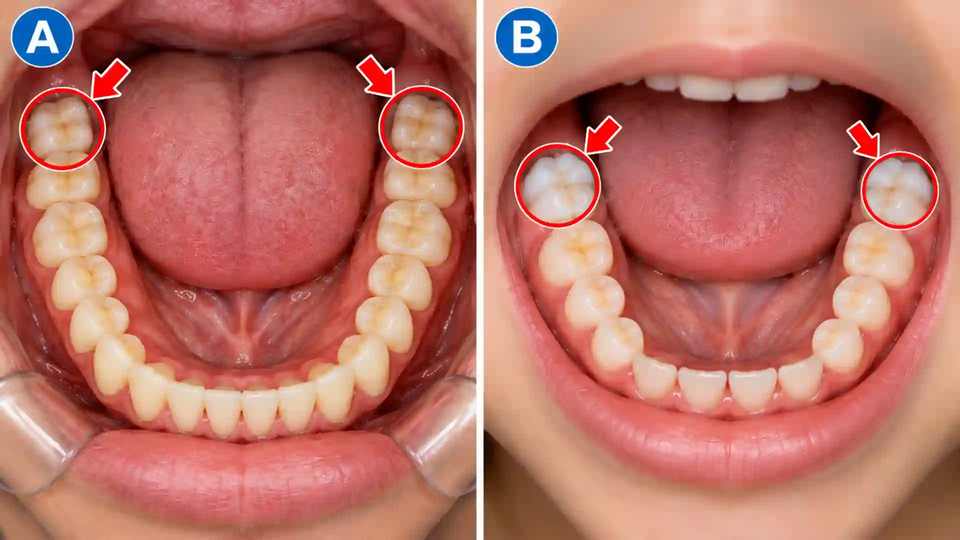
Six-Year Molars: When First Permanent Molars Appear and How to Protect Them
The correct quiz answer is B: First permanent molars. These teeth, commonly called six-year molars, usually appear around ages 6–7 behind the last baby molars. They do not replace baby teeth, so they can emerge without a loose tooth falling out.
Key Takeaways:
First permanent molars usually erupt around ages 6–7, although timing varies among children.
They emerge behind the baby molars rather than replacing them.
Their deep chewing grooves can retain plaque and make cleaning more difficult.
Brush twice daily with fluoride toothpaste and pay particular attention to the back teeth.
Ask a pediatric dentist whether dental sealants and additional fluoride are appropriate.
Persistent pain, facial swelling, or other concerning symptoms warrant professional assessment.
This guide explains how to recognize six-year molars, when they appear, how to clean them, and how to help protect them from cavities.
Medical information notice: This article provides general educational information and does not replace individualized examination, diagnosis, or treatment from a licensed dental professional.
Quiz Answer: Which Permanent Teeth Usually Appear Around Age Six?
First permanent molars are the correct answer. They generally erupt around ages 6–7 and are often called six-year molars because they commonly appear at this stage of childhood.
Wisdom teeth develop much later, usually emerging in late adolescence or early adulthood, although some people develop fewer wisdom teeth or none at all.
One important difference is that first permanent molars emerge behind the existing baby molars. They do not replace a baby tooth, which is why parents may overlook them when checking their child's developing teeth.
What Are Six-Year Molars?
Six-year molars are the first permanent molars, the large back teeth responsible for crushing and grinding food. Most children develop four first permanent molars: one on each side of the upper jaw and one on each side of the lower jaw.
These teeth help support chewing and the developing bite. Unlike permanent incisors, which replace baby teeth, first permanent molars emerge behind the existing baby molars.
First permanent molars are intended to last into adulthood. Protecting them early helps reduce the risk of decay that could otherwise require fillings or more extensive treatment.
When Do First Permanent Molars Appear?
First permanent molars generally erupt around ages 6–7, although they may erupt earlier or later in some children. The upper and lower molars may not appear simultaneously, and one side may erupt before the other.
Permanent front teeth often emerge around ages 6–8 and commonly replace baby incisors. Second permanent molars generally appear later, around ages 11–13, with variation by jaw and individual development.
These are approximate developmental ranges, not strict deadlines. If a first permanent molar has not appeared by around age seven, one side seems noticeably delayed, or a tooth appears trapped, ask a pediatric dentist whether an examination is appropriate.
Reference: American Dental Association, Tooth Eruption Charts: https://www.mouthhealthy.org/all-topics-a-z/eruption-charts.
How Can You Tell a Baby Molar From a First Permanent Molar?
The most useful distinction is the tooth's position, not its appearance alone. A first permanent molar usually emerges behind the last baby molar, while a baby molar is already part of the existing row of primary teeth.
Baby molars eventually fall out and are replaced by permanent premolars. First permanent molars are not replaced by another tooth and are intended to remain throughout adulthood.
A newly erupted permanent molar may have a broad chewing surface with visible grooves. However, size and shape alone cannot reliably establish whether a tooth is permanent. If its position is unclear, a dental professional can identify it.
Why Are Six-Year Molars Vulnerable to Cavities?
Six-year molars have pits and fissures, which are natural depressions and grooves on their chewing surfaces. These areas can retain plaque and food particles, making them harder to clean than smoother tooth surfaces.
Dental plaque is a sticky film of bacteria that forms on teeth. When certain bacteria use sugars and fermentable carbohydrates from foods and drinks, they produce acids that remove minerals from enamel. Repeated acid exposure can lead to early mineral loss and, if the process continues, a cavity.
Newly erupted molars can be especially challenging to clean because part of the chewing surface may still be covered by gum tissue. The tooth may sit lower than neighboring teeth, making it easy for a child to miss during brushing.
Frequent sugary snacks, repeated sipping of sweetened drinks, inadequate plaque removal, dry mouth, and a history of cavities can also influence risk.
Reference: National Institute of Dental and Craniofacial Research, The Tooth Decay Process: https://www.nidcr.nih.gov/health-info/tooth-decay/more-info/tooth-decay-process.
How Should You Clean Partially Erupted Permanent Molars?
Partially erupted molars need careful, consistent cleaning. The goal is to remove plaque from the exposed tooth without irritating the surrounding gum tissue.
Use a small, soft-bristled toothbrush that can comfortably reach the back of the mouth. Brush the exposed chewing surface gently with short, controlled back-and-forth strokes, paying attention to the visible grooves.
Clean around the gumline without forcing bristles beneath a gum flap or trying to uncover the tooth manually. Good lighting and a mirror can help parents check whether the brush reaches the entire exposed surface.
If the molar contacts a neighboring tooth, clean between them daily with floss or another age-appropriate interdental cleaner. Do not force floss into tender gum tissue or through a space where it cannot pass comfortably.
Brush twice daily with fluoride toothpaste and help your child until they can reliably clean every surface. If the gum remains painful, swollen, or bleeding, ask a dentist to assess the area and demonstrate a suitable technique.
How Can Dental Sealants Help Protect Six-Year Molars?
Dental sealants are thin protective coatings applied to the pits and grooves of chewing surfaces, especially permanent molars. They form a barrier that helps keep food particles and cavity-causing bacteria away from vulnerable areas.
Sealants are particularly useful for first permanent molars because these teeth often erupt while children are still developing effective brushing skills.
The Centers for Disease Control and Prevention reports that dental sealants can prevent up to 80% of cavities in the back teeth during the first two years after placement and continue protecting against about 50% of cavities for up to four years. These are population-level findings, not guaranteed outcomes for an individual child.
Sealants are commonly considered soon after first permanent molars erupt. The tooth must be sufficiently accessible for the dental professional to prepare and keep its surface appropriately dry during placement. If a molar is only partly erupted, the dentist may recommend monitoring it and applying the sealant when conditions are suitable.
Sealants do not replace brushing with fluoride toothpaste, daily plaque control, or regular dental visits. A dentist should check them during routine appointments and repair or replace them if needed.
References:
CDC — About Dental Sealants: https://www.cdc.gov/oral-health/prevention/about-dental-sealants.html
CDC — Dental Sealant Facts: https://www.cdc.gov/oral-health/data-research/facts-stats/fast-facts-dental-sealants.html
How Much Do Dental Sealants Cost?
The cost of dental sealants varies according to location, dental practice, number of teeth treated, and insurance benefits. A 2024 U.S. cost study cited by CareCredit reported an estimated range of $33–$82 per tooth, with an average cost of $42 per tooth.
Using that reference range, sealing all four first permanent molars would cost approximately $132–$328 for the sealants alone. At the reported average of $42 per tooth, four sealants would total approximately $168. These calculations are estimates based on the published figures, not a current quote or a guaranteed bundled price.
Ask the dental office whether the estimate includes only the sealants or also covers an examination, X-rays, or other services. Additional services may be billed separately.
Many dental insurance plans cover sealants for eligible children, but coverage varies. Age limits, eligible teeth, frequency restrictions, network status, deductibles, copayments, and coinsurance may affect out-of-pocket costs.
Families without private dental insurance can explore community dental clinics, dental schools, public-health programs, and school-based sealant programs. Eligible children may receive dental services through Medicaid or the Children's Health Insurance Program (CHIP), depending on program rules and state arrangements.
References:
CareCredit — What Are Dental Sealants and How Do They Work?: https://www.carecredit.com/well-u/health-wellness/what-are-dental-sealants/
InsureKidsNow.gov — Find a Dentist: https://www.insurekidsnow.gov/find-a-dentist.
When Should You Call a Pediatric Dentist?
Mild pressure or temporary gum tenderness can occur while a tooth erupts, but not every symptom near a new molar is normal eruption discomfort.
Arrange a dental appointment if your child experiences persistent or worsening pain, pain when biting, a visible dark spot or hole, recurring food trapping, or sensitivity that interferes with eating. Persistent gum bleeding or swelling should also be assessed.
Seek prompt professional care for facial swelling, pus, fever accompanied by dental symptoms, or significant swelling around the tooth. Difficulty breathing or swallowing, or rapidly spreading swelling, requires emergency medical care.
Do not attempt to scrape a suspected cavity, cut gum tissue, or move an emerging tooth yourself. A dental examination can determine whether the problem involves eruption, tooth decay, or another condition and whether treatment is needed.
How Can Parents Protect Six-Year Molars?
A practical prevention routine combines daily cleaning with professional assessment. Parents can use the following checklist to help protect newly erupted permanent molars.
Brush twice daily with fluoride toothpaste and check the back molars carefully.
Clean between neighboring teeth daily when contact points are present.
Use gentle strokes on partially erupted chewing surfaces without forcing bristles under the gum.
Offer water between meals and limit frequent sugary snacks and drinks.
Ask a pediatric dentist whether sealants and additional fluoride are appropriate.
Confirm dental insurance benefits or available community programs.
Report persistent pain, swelling, or visible signs of decay.
A newly erupted molar is a useful reason to arrange a dental checkup if one is not already planned. Ask whether the tooth is ready for a sealant and whether additional preventive measures are appropriate for your child's dental history and individual risk.
Common Mistakes to Avoid
Assuming a permanent molar replaces a baby tooth: First permanent molars usually emerge behind the last baby molars. Check the back of the mouth rather than waiting for a baby tooth to fall out.
Missing the chewing grooves during brushing: Newly erupted molars may sit lower than neighboring teeth. Guide the toothbrush carefully across the exposed chewing surface and check that the far back of the mouth is reached.
Waiting for pain before arranging a checkup: Early tooth decay may not cause noticeable discomfort. A dental examination can identify concerns before symptoms become obvious.
Assuming sealants replace all other preventive care: Sealants protect selected chewing surfaces but do not remove the need for fluoride toothpaste, daily plaque control, and dental visits.
Frequently Asked Questions About Six-Year Molars
Do six-year molars hurt when they come in?
Some children experience mild pressure or gum tenderness, while others have few symptoms. Persistent pain, pain when biting, swelling, fever with dental symptoms, or difficulty eating should be assessed rather than automatically attributed to eruption.
Do six-year molars replace baby teeth?
No. First permanent molars usually emerge behind the last baby molars. They do not replace an existing baby tooth in the way permanent incisors replace baby front teeth.
At what age should children get dental sealants?
Sealants are commonly considered when the first permanent molars erupt, usually around ages 6–7. A dentist determines whether the tooth is accessible enough for appropriate placement and whether its grooves and cavity risk make sealing beneficial.
Can a six-year molar develop a cavity soon after it appears?
Yes. A newly erupted permanent molar can develop decay, particularly when its grooves are difficult to clean or the child has other cavity risk factors. Fluoride toothpaste, careful brushing, dental visits, and appropriate sealants help reduce that risk.
How much do dental sealants cost?
A 2024 U.S. cost study reported an estimated range of $33–$82 per tooth, with an average of $42. Four sealants would therefore total approximately $132–$328 at those reference prices, before any separately billed services or insurance adjustments. Actual costs vary by provider, location, and coverage.
Sources
- Centers for Disease Control and Prevention (CDC). About Dental Sealants. https://www.cdc.gov/oral-health/prevention/about-dental-sealants.html
- CDC. Dental Sealant Facts. https://www.cdc.gov/oral-health/data-research/facts-stats/fast-facts-dental-sealants.html
- American Dental Association (ADA). Tooth Eruption Charts. https://www.mouthhealthy.org/all-topics-a-z/eruption-charts
- ADA. Toothbrushes. https://www.ada.org/resources/ada-library/oral-health-topics/toothbrushes
- ADA. Dental Sealants. https://www.ada.org/resources/ada-library/oral-health-topics/dental-sealants/
- ADA. Home Oral Care. https://www.ada.org/resources/ada-library/oral-health-topics/home-care/
- National Institute of Dental and Craniofacial Research (NIDCR). The Tooth Decay Process. https://www.nidcr.nih.gov/health-info/tooth-decay/more-info/tooth-decay-process
- CareCredit. What Are Dental Sealants and How Do They Work? https://www.carecredit.com/well-u/health-wellness/what-are-dental-sealants/
- InsureKidsNow.gov. Find a Dentist. https://www.insurekidsnow.gov/find-a-dentist/