Does Coffee Stain Your Teeth? Prevention and Teeth Whitening Options
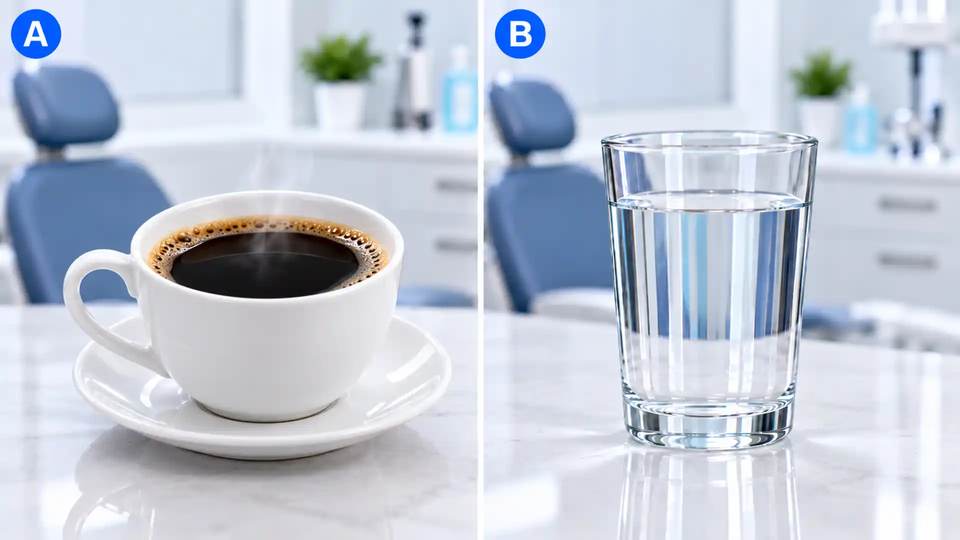
The correct quiz answer is A: Black coffee. Coffee can stain teeth because its colored compounds can accumulate on the enamel surface, gradually creating yellow or brown discoloration. Most coffee-related staining begins on the outside of the tooth, where good oral hygiene and professional cleaning may help. Whitening treatments can address some deeper discoloration, but the right option depends on your teeth, restorations, sensitivity, and oral health.
Key Takeaways:
Coffee stains are usually external deposits on tooth surfaces, although not every dark or yellow tooth is stained by coffee.
Water, reasonable drinking habits, fluoride toothpaste, and routine dental care may help limit staining without requiring you to stop drinking coffee.
Professional cleaning removes deposits and many surface stains, while peroxide-based whitening can change the shade of natural teeth.
Crowns, veneers, and fillings do not bleach like natural enamel, and whitening can cause temporary sensitivity or gum irritation.
Published U.S. historical whitening costs can help with budgeting, but a current written quote from a dental office is more useful than an advertised price alone.
This guide explains why coffee stains develop, how to reduce them safely, and how to compare professional cleaning and teeth whitening options.
Medical information notice: This article provides general educational information and does not replace individualized examination, diagnosis, or treatment from a licensed dental professional.
Quiz Answer: Which Drink Is More Likely to Stain Your Teeth?
Black coffee is the correct answer. Coffee contains intensely colored compounds that can adhere to tooth surfaces and contribute to yellow or brown discoloration over time.
Plain water does not contain the dark pigments found in coffee. Drinking or rinsing with plain water after coffee can help clear some residual beverage from the mouth without adding sugar or abrasive ingredients.
Coffee staining is usually an external color change rather than proof of permanent enamel damage. Professional cleaning may remove many surface deposits, while whitening may be appropriate for certain other types of discoloration.
Why Does Coffee Stain Your Teeth?
Coffee contains intensely colored compounds, including chromogens, that can adhere to the outer surfaces of teeth. With repeated exposure, these compounds may contribute to visible discoloration, especially where plaque or surface irregularities allow deposits to accumulate.
The American Dental Association (ADA) recognizes coffee, tea, and red wine as common causes of extrinsic staining. An extrinsic stain develops on the outer surface of a tooth, while an intrinsic stain involves discoloration within tooth structure.
Black coffee provides direct exposure to coffee pigments. Adding milk changes the beverage's composition and appearance, but there is no dependable rule that a particular amount of milk prevents staining.
Added sugar is a separate concern. It does not explain the dark pigment itself, but frequent sugar exposure can promote tooth decay. Sweetened coffee sipped repeatedly throughout the day may therefore raise a different dental concern alongside staining.
Is Coffee Staining the Same as Enamel Damage or Tooth Decay?
No. Tooth staining, enamel erosion, and cavities are different dental conditions.
Staining describes a change in tooth color, often caused by pigments collecting on the tooth surface. Enamel erosion involves chemical loss of tooth mineral, while cavities involve tooth decay associated with acids produced by oral bacteria.
These problems can occur together, but they are not interchangeable. Frequent acidic drinks can contribute to erosive challenges, particularly when combined with other acidic foods or habits. However, the presence of a coffee stain does not by itself prove that enamel has been damaged.
If a tooth becomes rough, sensitive, chipped, or otherwise different, ask a dentist to examine it rather than assuming the problem is purely cosmetic.
Are Coffee Stains on Teeth Always Surface Stains?
Coffee stains are often surface deposits, but tooth discoloration can have several causes. Age-related changes, existing restorations, cavities, trauma, and certain medications can also affect tooth color.
Brown or yellow deposits on several teeth may reflect external staining from coffee or other colored substances. Routine cleaning or a suitable stain-removing toothpaste may help.
Gradual overall yellowing may involve surface staining, natural tooth color, and age-related changes. Professional cleaning can be a reasonable starting point before considering cosmetic whitening.
A single tooth that suddenly becomes gray or dark may indicate trauma, internal tooth changes, or another dental condition. A dark area near a filling or gumline may reflect staining, restoration discoloration, or possible decay.
If visible front teeth contain crowns, veneers, or fillings, their color may differ from natural teeth. A dentist can assess the cause of discoloration before recommending treatment.
How Can You Prevent Coffee Stains Without Giving Up Coffee?
The goal is to limit pigment contact while protecting enamel. No single habit guarantees stain-free teeth.
1. Avoid sipping coffee continuously. Having coffee with breakfast or during a defined break may be preferable to taking repeated small sips over several hours. This limits repeated pigment contact and, for sweetened coffee, sugar exposure.
2. Rinse with plain water afterward. Drinking or swishing water after coffee can help clear some residual beverage without adding sugar or abrasive ingredients.
3. Brush twice daily with fluoride toothpaste. Brush for about two minutes using a soft-bristled toothbrush and clean between the teeth daily. A suitable stain-removing toothpaste may help manage surface discoloration.
4. Consider acidity before brushing immediately. If coffee or accompanying foods are acidic, rinse with water rather than immediately scrubbing the teeth. The ADA advises waiting about an hour after acidic foods before brushing as an enamel erosion precaution.
5. Consider a straw when practical. Positioning a straw to reduce direct contact with front teeth may help in some situations, particularly with iced coffee, but it cannot prevent all staining.
6. Keep dental examinations and cleanings appropriate to your needs. Professional cleaning can remove deposits and some external stains while allowing a dentist to identify other possible causes of discoloration.
Evidence for how much each individual habit prevents coffee stains is limited. Consistent oral hygiene and appropriate dental care remain important.
Can Whitening Toothpaste Remove Coffee Stains?
Whitening toothpaste can reduce some coffee-related surface discoloration, especially when it uses polishing or stain-removing ingredients and is used as directed.
Some whitening toothpastes rely mainly on mild abrasives, while others contain additional ingredients. Products carrying the ADA Seal of Acceptance for the relevant stain-removal claim have been evaluated against applicable safety and effectiveness requirements.
Whitening toothpaste generally cannot change the intrinsic color of natural teeth to the same degree as peroxide-based bleaching.
Avoid brushing harder to remove stains. Aggressive brushing can irritate the gums and contribute to tooth wear. Also avoid coarse abrasives, activated charcoal powder, lemon juice, and other do-it-yourself whitening mixtures that may be ineffective or potentially harmful.
Which Teeth Whitening Options Work for Coffee Stains?
The most appropriate treatment depends on whether the discoloration is primarily an external surface stain or whether the goal is to lighten the natural tooth shade.
Regular brushing and an appropriate stain-removing toothpaste can help manage surface discoloration. Professional dental cleaning and polishing can remove plaque, tartar, and many external stains, but cleaning does not bleach teeth beyond their underlying natural shade.
Over-the-counter whitening strips, dentist-provided whitening trays, and in-office professional whitening use bleaching ingredients to lighten natural teeth. Hydrogen peroxide and carbamide peroxide can break down colored compounds within tooth tissues.
Whitening outcomes vary with the type of discoloration and individual response. Temporary tooth sensitivity and gum irritation are recognized possible side effects.
Professional stain removal and cosmetic bleaching serve different purposes. Ask a dentist whether cleaning is sufficient before paying for a whitening treatment that may not be necessary.
Can Whitening Change the Color of Crowns, Veneers, and Fillings?
Peroxide-based whitening can lighten natural tooth tissues, but crowns, veneers, and tooth-colored fillings do not bleach in the same way.
If natural teeth become lighter after treatment, existing restorations may appear darker by comparison. This difference can be especially noticeable on front teeth.
Before whitening, ask a dentist whether existing restorations are likely to match the intended shade. Replacing a sound restoration solely for cosmetic shade matching is a separate clinical and financial decision.
Whitening also does not repair cavities, restore lost enamel, or treat gum disease. Dental problems should be assessed before elective cosmetic treatment.
Is Enamel-Safe Teeth Whitening Possible?
Teeth whitening can be performed with an appropriate product and protocol. However, enamel-safe whitening should mean that the treatment is suitable for the person's oral condition and is used according to professional or manufacturer instructions, not that it carries zero risk.
The ADA identifies temporary tooth sensitivity and gum irritation among the potential side effects of peroxide-based whitening. Existing cavities, gum problems, cracked teeth, or unexplained pain may change the appropriate treatment plan.
Before whitening, consider whether dark spots or painful areas have been evaluated, whether restorations will match afterward, and whether you have experienced significant sensitivity during previous treatments.
Do not use unusually concentrated peroxide, mix household bleaching chemicals, or extend treatment times beyond product directions. If irritation or sensitivity becomes significant or persistent, stop treatment and consult a dentist.
How Much Does Teeth Whitening Cost in the United States?
Teeth whitening costs depend on the method, geographic location, provider fees, and any separate examination or cleaning. Published U.S. figures provide historical context rather than current 2026 dental office quotes.
CareCredit's November 2024 whitening cost guide reported these reference amounts:
In-office laser whitening: Average $792; reported range $611–$1,368.
In-office Zoom! whitening: Average $583; reported range $463–$1,011.
Dentist-provided take-home whitening kit: Reference range $375–$500, not a national average.
Routine dental examination with cleaning and X-rays: Average $203; reported range $50–$350. This is a bundled visit amount, not a cleaning-only price.
These figures represent different procedure categories and should not be treated as guaranteed prices for an individual patient.
Sources:
https://www.carecredit.com/well-u/health-wellness/teeth-whitening-costs/
https://www.carecredit.com/dentistry/costs/
Does Dental Insurance Cover Professional Teeth Whitening?
Dental insurance generally does not cover elective cosmetic teeth whitening, although coverage for routine dental examinations and professional cleanings may differ.
Before treatment, ask the dental office for an itemized quote identifying the whitening procedure, any initial examination, necessary cleaning, trays, follow-up appointments, and possible touch-up care.
Confirm whether a quoted fee includes all services or whether additional visits are billed separately. Do not count an included examination or cleaning twice when estimating the total cost.
Insurance benefits vary by plan, so review the actual policy and ask the insurer or dental office about applicable coverage and out-of-pocket costs.
How Do You Choose Between Cleaning, Whitening Strips, and a Dentist?
The appropriate starting point depends on the type of discoloration and whether other dental symptoms are present.
For gradual brown surface staining from coffee, consider a dental examination or routine cleaning and ask whether a stain-removing toothpaste may help.
If teeth appear clean but naturally yellow, discuss whitening options with a dentist because surface cleaning may not change the underlying shade.
If you prefer treatment at home, ask about suitable whitening strips or dentist-provided trays and follow the product instructions carefully.
If a single tooth suddenly darkens, arrange a dental examination before whitening because trauma or another internal condition may be involved.
If you have sensitive teeth, gum irritation, visible fillings, crowns, or veneers, discuss those issues before bleaching. Treatment should address the cause of discoloration rather than relying solely on appearance.
What Are the Most Common Coffee Stain Removal Mistakes?
Brushing harder to scrub stains away: Excessive force is not a substitute for an appropriate toothpaste or professional cleaning.
Using acidic or abrasive homemade mixtures: Lemon juice, charcoal powders, and similar methods may create unnecessary risks without reliable whitening benefits.
Assuming one dark tooth is a coffee stain: An isolated tooth changing color warrants examination, particularly after trauma or when accompanied by discomfort.
Expecting restorations to bleach: Crowns, veneers, and fillings generally retain their shade even when natural teeth lighten.
Buying a whitening kit before understanding the problem: Surface staining, internal discoloration, and tooth decay require different approaches.
Frequently Asked Questions About Coffee Stains and Teeth Whitening
Which drink is more likely to stain your teeth?
Black coffee is more likely to cause external tooth staining than plain water because it contains colored compounds that can collect on enamel surfaces.
Can coffee stains be removed completely?
Some surface stains can be reduced substantially through stain-removing toothpaste or professional cleaning. Complete removal cannot be guaranteed because results depend on the type of discoloration and underlying tooth shade.
Does drinking coffee through a straw prevent staining?
A straw may reduce direct contact with some front tooth surfaces, particularly with iced coffee, but it does not eliminate exposure or guarantee stain-free teeth.
Is whitening toothpaste as effective as professional teeth whitening?
Usually not for changing the underlying natural tooth shade. Whitening toothpaste mainly removes external staining, while peroxide-based bleaching can lighten natural tooth color.
Can whitening damage enamel or make teeth sensitive?
Whitening products can cause temporary sensitivity or gum irritation, particularly when used incorrectly. Follow instructions and consult a dentist before bleaching if you have pain, restorations, or existing dental problems.
Will coffee stain my teeth again after whitening?
It can. Whitening does not permanently prevent pigments from collecting on teeth again. Long-term results vary with coffee exposure, oral hygiene, and individual factors.
Does dental insurance cover professional teeth whitening?
Cosmetic whitening is generally not covered, although examinations and cleanings may have separate benefits. Confirm details with your insurer and obtain an itemized quote.
Sources
- American Dental Association (ADA). Whitening. https://www.ada.org/resources/ada-library/oral-health-topics/whitening
- American Dental Association, MouthHealthy. Teeth Whitening. https://www.mouthhealthy.org/all-topics-a-z/teeth-whitening
- American Dental Association, MouthHealthy. Natural Teeth Whitening. https://www.mouthhealthy.org/all-topics-a-z/natural-teeth-whitening
- American Dental Association (ADA). Dental Erosion. https://www.ada.org/resources/ada-library/oral-health-topics/dental-erosion
- American Dental Association (ADA). ADA Seal of Acceptance. https://www.ada.org/resources/research/science/ada-seal-of-acceptance/
- CareCredit. How Much Does Teeth Whitening Cost? November 2024. https://www.carecredit.com/well-u/health-wellness/teeth-whitening-costs/
- CareCredit. Dental Exam and Procedure Costs. https://www.carecredit.com/dentistry/costs/
- American Dental Association, MouthHealthy. Do-it-yourself Dentistry. https://www.mouthhealthy.org/all-topics-a-z/diy-dentistry
- American Dental Association, MouthHealthy. Dietary Acids and Your Teeth. https://www.mouthhealthy.org/all-topics-a-z/dietary-acids-and-your-teeth