Root Canal Treatment: How Dentists Treat an Infected Tooth Pulp
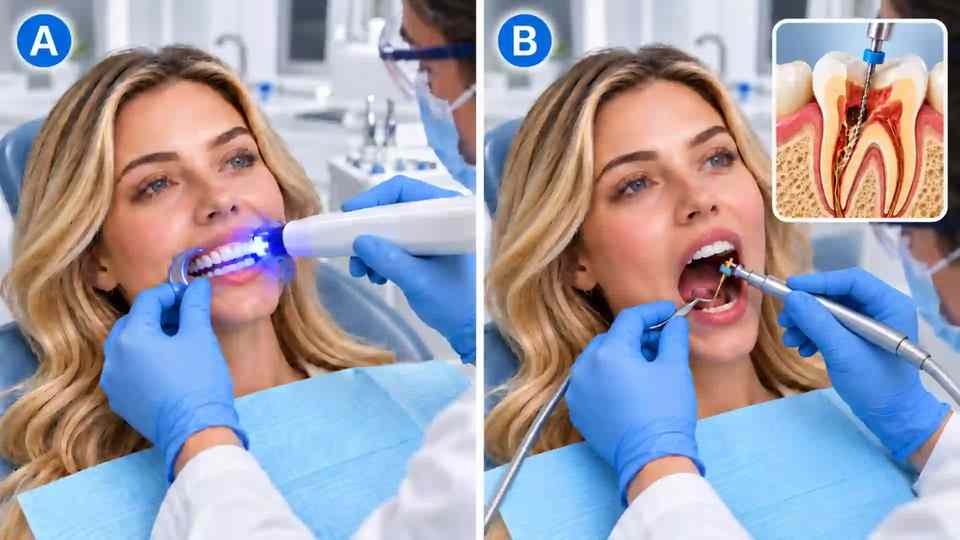
The correct quiz answer is B: Root canal treatment. Root canal treatment removes infected or severely inflamed pulp from inside a tooth, cleans and seals the root canals, and helps preserve the natural tooth. Dentists may recommend this procedure when deep decay, cracks, or trauma affect the pulp. With local anesthesia, treatment is generally manageable, although temporary soreness can occur. A crown or another permanent restoration may be needed afterward.
Key Takeaways:
Root canal treatment can save a restorable natural tooth by removing damaged pulp while preserving the surrounding tooth structure.
Symptoms alone cannot confirm the diagnosis. Lingering sensitivity, biting pain, swelling, or a gum abscess may suggest pulp disease, but professional testing is necessary.
Not every inflamed pulp requires conventional root canal treatment. Selected teeth with living pulp may be suitable for vital pulp therapy.
Temporary tenderness after treatment is common, but worsening pain, swelling, or returning symptoms require reassessment.
Root canal treatment and permanent restoration are separate procedures, and their fees may be billed separately.
This guide explains how dentists diagnose infected tooth pulp, what happens during treatment, how root canals compare with extraction, and what patients should know about recovery, costs, and dental insurance.
Medical information notice: This article provides general educational information and does not replace individualized dental examination, diagnosis, or treatment.
Quiz Answer: Which Procedure Is Commonly Used to Treat Infected Tooth Pulp?
Root canal treatment is the correct answer. It is a procedure designed to treat diseased pulp inside a tooth while preserving the natural tooth when the remaining structure can be restored.
During treatment, a dentist or endodontist removes infected, severely inflamed, or necrotic pulp tissue. The root canals are cleaned, disinfected, filled, and sealed. The tooth is then restored with an appropriate filling, crown, or another permanent restoration.
Teeth whitening is not the correct answer because it is intended to lighten the color of natural teeth. Whitening products do not remove infected pulp, clean root canals, or treat infection around a tooth's root.
The appropriate treatment depends on the pulp diagnosis, the remaining tooth structure, and whether the tooth can be predictably restored.
What Is Root Canal Treatment?
Root canal treatment is an endodontic procedure that removes diseased pulp tissue from inside a tooth, cleans the root canal system, and seals the treated space.
The dental pulp is the soft tissue within the tooth containing nerves, blood vessels, and connective tissue. It occupies the pulp chamber in the crown and extends through narrow canals inside the roots.
Pulp plays an important role during tooth development. Once a permanent tooth is mature, however, it can continue functioning after the pulp is removed because surrounding tissues support the tooth.
The American Association of Endodontists (AAE) describes root canal treatment as a way to manage inflammation or infection within the tooth while preserving its natural structure.
Successful treatment also requires an appropriate permanent restoration and ongoing dental care.
What Causes Infected Tooth Pulp?
The dental pulp can become inflamed or infected when bacteria reach the tooth's interior or when the tooth sustains significant damage.
Deep tooth decay: Bacteria associated with an advanced cavity may eventually affect the pulp.
Cracked teeth: A fracture can expose deeper structures or create a pathway for bacteria to enter.
Dental trauma: An injury can damage pulp tissue even when no obvious fracture is visible.
Repeated dental procedures: Extensive or repeated treatment can contribute to pulp irritation or injury.
Problems with existing restorations: Deep decay or leakage around a damaged restoration may expose the pulp to bacteria.
Not every pulp injury begins with an infection. Inflammation may develop before bacteria have extensively infected the root canal system.
This distinction matters because treatment depends on the condition of the pulp, not simply whether a cavity or an old filling is present.
What Are the Signs That You May Need a Root Canal?
Possible signs of pulp disease include lingering temperature sensitivity, pain when biting, spontaneous toothache, localized swelling, or a recurring bump on the gum.
Brief sensitivity to cold may result from exposed dentin, early decay, or another condition. Pain that lingers after exposure to hot or cold substances may suggest significant pulp inflammation.
Spontaneous or nighttime toothache can indicate pulp disease, while pain during chewing may result from pulp-related inflammation, a crack, or another dental problem.
A recurring bump on the gum may indicate drainage from a dental infection. Facial swelling with fever can suggest a more serious infection requiring urgent assessment.
Some teeth with severely damaged or necrotic pulp cause little or no pain. The absence of discomfort therefore does not establish that a tooth is healthy.
No single symptom proves that root canal treatment is necessary. A dentist must evaluate the tooth through examination, diagnostic testing, and imaging when appropriate.
How Do Dentists Diagnose an Infected Tooth Pulp?
Dentists combine symptom history, clinical examination, pulp testing, and imaging to determine whether root canal treatment is appropriate.
The dentist asks when symptoms began, what triggers them, and how long discomfort continues. Clinical tests may include controlled cold stimulation, checking tenderness when tapping the tooth, and examining the gums and surrounding tissues.
These findings help distinguish reversible pulp inflammation from more serious conditions. A cold response alone does not establish the diagnosis.
Dental X-rays can reveal deep cavities, previous restorations, and certain changes around tooth roots. A lesion near the root tip may suggest inflammation or infection in the surrounding tissues, although not every pulp problem creates an immediately visible radiographic change.
In selected complex cases, cone-beam computed tomography, or CBCT, may help investigate root anatomy or suspected disease. It is not automatically necessary for routine treatment.
A dentist or endodontist uses the complete clinical picture to determine the pulp diagnosis, treatment options, and whether the tooth is restorable.
Can an Inflamed Tooth Pulp Be Treated Without a Root Canal?
Sometimes. A deep cavity or inflamed pulp does not automatically mean conventional root canal treatment is the only option.
When a tooth has living, or vital, pulp, a dentist may consider treatments intended to preserve healthy remaining pulp tissue. These are known as vital pulp therapy.
Depending on the clinical and intraoperative findings, selected teeth may be suitable for partial or full pulpotomy. The goal is to remove affected tissue while preserving pulp that can remain healthy.
The American Association of Endodontists recognizes that carefully selected mature permanent teeth with substantial pulp inflammation may have treatment options beyond conventional root canal therapy.
However, vital pulp therapy is not a routine alternative for teeth with necrotic pulp. When the pulp is necrotic, root canal treatment or extraction is generally considered according to the tooth's condition and restorability.
The choice requires professional diagnosis rather than relying on symptoms, cavity size, or an X-ray alone.
How Does Root Canal Treatment Remove Infected Tooth Pulp?
A conventional root canal usually follows a sequence of diagnosis, anesthesia, isolation, pulp removal, canal cleaning, sealing, and restoration. Treatment can often be completed in one or two appointments, although complex cases may require additional visits.
Step 1: Confirm the diagnosis and treatment plan. The dentist evaluates the tooth, explains the procedure, and determines whether enough healthy structure remains for a lasting restoration.
Step 2: Numb and isolate the tooth. Local anesthesia helps maintain comfort. A dental dam separates the tooth from the rest of the mouth, helping prevent saliva contamination and reducing the risk of swallowing small instruments or dental materials.
Step 3: Access the pulp chamber. The dentist creates an opening through the tooth and uses specialized instruments to remove inflamed, infected, or necrotic pulp tissue.
Step 4: Clean and shape the root canals. Narrow canals are prepared with specialized instruments, while disinfecting solutions help reduce bacteria and remove debris.
Step 5: Fill and seal the canals. A biocompatible filling material, commonly gutta-percha, is placed with a sealer to close the treated spaces and reduce opportunities for reinfection.
Step 6: Restore the tooth. A permanent filling, crown, or another appropriate restoration protects the remaining structure and helps prevent bacteria from reentering the treated tooth.
Completing the permanent restoration promptly is important for long-term tooth protection.
Does Root Canal Treatment Hurt?
Modern root canal treatment is generally performed with local anesthesia, making the procedure manageable for many patients.
The goal is to relieve pain associated with damaged or infected pulp, not create additional discomfort.
Some teeth affected by severe inflammation can be more difficult to numb. Dentists may use additional anesthetic techniques when necessary.
After treatment, temporary tenderness is common, particularly when inflammation was present around the root. Discomfort often improves during the initial healing period.
Patients with significant dental anxiety should discuss their concerns before treatment. Available comfort measures vary by dental practice and individual medical circumstances.
Severe or worsening pain, swelling, or symptoms that return after initially improving should be reported to the treating dentist.
Root Canal vs. Tooth Extraction: Which Is Better?
Root canal treatment aims to preserve a restorable natural tooth. Extraction removes the tooth and may require a separate plan for replacing it.
Root canal treatment may be appropriate when the pulp requires treatment and enough healthy tooth structure remains to support a predictable restoration.
Extraction may be appropriate when the tooth has severe structural damage, inadequate periodontal support, an unfavorable fracture, or another condition that makes preservation unlikely.
Preserving a natural tooth can help maintain chewing function and avoid the immediate need for a replacement. However, root canal treatment does not guarantee permanent tooth survival.
After extraction, a dentist may discuss a dental implant, bridge, removable replacement, or leaving the space unrestored, depending on the circumstances.
Total costs should account for the complete treatment plan. Root canal treatment may require a separate crown, while extraction may involve additional replacement procedures.
Neither option is universally better. The appropriate choice depends on the tooth's condition, long-term prognosis, and patient needs.
Does Every Root Canal Need a Crown?
No. A crown is commonly recommended for back teeth after root canal treatment, but not every treated tooth requires the same restoration.
Molars and premolars experience substantial chewing forces. When significant tooth structure has been lost, crown coverage may help protect the tooth from fracture.
Some front teeth with sufficient remaining healthy structure may be restored with an appropriate permanent filling.
The restoration decision depends on tooth location, remaining structure, previous restorations, and biting forces.
Root canal treatment and crown placement are separate procedures. Their fees are not automatically included in one another.
Ask your dentist what permanent restoration is planned before treatment begins and whether it is included in the estimate.
What Should You Expect During Root Canal Recovery?
Root canal recovery commonly involves temporary tenderness around the treated tooth, particularly during the first several days.
During the first day, wait until numbness has worn off before chewing to reduce the risk of accidentally biting your tongue or cheek. Avoid heavy chewing pressure on a tooth with a temporary restoration.
The clinician may recommend an appropriate over-the-counter pain reliever. Follow medication instructions and consider any personal contraindications.
During the following days, mild tenderness may gradually improve as the surrounding tissues recover. Continue brushing and flossing carefully according to the dentist's instructions.
Avoid chewing hard foods directly on the treated tooth until its permanent restoration is completed or your dentist confirms that normal use is appropriate.
Contact the dental office for severe or worsening pain, visible swelling, a bite that feels unusually high, loss of a temporary filling or crown, returning symptoms, or an unexpected medication reaction.
Follow-up care and timely permanent restoration are important for protecting the treated tooth.
When Is Emergency Root Canal Treatment Necessary?
Emergency root canal treatment may be considered when severe pulp-related pain or an acute dental infection requires prompt intervention.
An emergency dental appointment does not always mean the entire root canal procedure will be completed immediately. A dentist may first provide treatment to relieve pain or address infection and then arrange definitive care.
Persistent severe tooth pain, increasing swelling, or signs of a dental abscess warrant prompt professional assessment.
Facial swelling with fever, rapidly progressing swelling, or significant systemic symptoms may indicate a more serious infection.
Difficulty breathing or swallowing, or rapidly spreading swelling involving the face or neck, requires emergency medical care.
Do not delay urgent assessment while searching for a particular specialist, comparing prices, or waiting for insurance authorization.
Can Antibiotics Replace Root Canal Treatment?
Usually not. Antibiotics do not remove infected pulp or permanently resolve a tooth problem that requires root canal treatment.
The American Dental Association's 2019 evidence-based guideline recommends prioritizing definitive dental treatment rather than routine antibiotic prescriptions for most pulpal and localized periapical conditions in immunocompetent adults.
Antibiotics may be appropriate when systemic involvement or other clinical factors justify their use, but they are not a substitute for necessary dental procedures.
A dentist determines whether pulp treatment, drainage, extraction, or another intervention is appropriate.
Do not self-prescribe antibiotics or delay dental assessment because pain temporarily improves after medication.
How Much Does Root Canal Treatment Cost?
Root canal treatment costs vary according to tooth location, canal anatomy, procedure complexity, provider, geographic area, and additional services.
CareCredit's September 11, 2026 guide reported a U.S. national average root canal cost of $978, with an overall reported range of $679–$1,733. The figures were based on research conducted by ASQ360° in 2025–2026 on behalf of Synchrony's CareCredit.
Front tooth, anterior: Reported average $905; published range $590–$1,527.
Premolar, bicuspid: Reported average $1,023; published range $691–$1,827.
Molar: Reported average $1,220; published range $833–$2,171.
These are published study averages and ranges, not guaranteed prices or live quotes from a particular dental office.
Additional expenses may include the initial examination, X-rays, emergency evaluation, structural buildup, a permanent crown or filling, and treatment for complications.
For illustration, a hypothetical dental office quote of $1,200 for root canal treatment and $1,100 for a crown would total $2,300 before separately billed services. This is an example, not a national average or individualized estimate.
Request an itemized treatment plan that identifies every expected procedure and its estimated cost.
Source: CareCredit, Root Canal Cost and Procedure Guide, September 11, 2026. https://www.carecredit.com/well-u/health-wellness/what-is-a-root-canal/
Does Dental Insurance Cover Root Canal Treatment?
Many dental insurance plans provide some coverage for root canal treatment because it is generally considered restorative dental care. However, benefits vary by policy.
Plans may classify endodontic treatment, crowns, diagnostic examinations, imaging, and buildup procedures separately.
Before treatment, check whether the dentist or endodontist participates in your network, your remaining deductible, your annual benefit maximum, and the plan's coverage percentage for the procedure.
Ask whether a crown or other permanent restoration has separate insurance benefits and whether waiting periods, exclusions, or frequency restrictions apply.
A pretreatment estimate does not always guarantee the final amount paid by an insurance company.
If you do not have insurance, ask about payment arrangements or dental school clinics when appropriate.
Avoid delaying urgent treatment solely to obtain an insurance estimate when significant pain, infection, or worsening symptoms require prompt care.
Should You See a General Dentist or an Endodontist?
General dentists perform many root canal procedures. An endodontist is a dentist with additional specialty training focused on diagnosing dental pain and treating conditions affecting the inside of teeth.
An endodontist may be especially helpful when a tooth has complex canal anatomy, an uncertain diagnosis, a previously treated root canal requiring reassessment, or unusual structural problems.
Ask your regular dentist whether treatment can be completed in the general dental office or whether referral to an endodontist would be beneficial.
The most appropriate provider depends on the clinical situation rather than job title alone.
The American Association of Endodontists provides a Find My Endodontist directory for patients seeking specialist care: https://www.aae.org/patients/findmyendodontist/
Can a Root Canal-Treated Tooth Last for Many Years?
Yes. A successfully treated and properly restored natural tooth may continue functioning for many years.
However, root canal treatment does not guarantee that a tooth will last forever. Long-term outcomes depend on the original damage, root canal anatomy, quality of treatment, remaining tooth structure, permanent restoration, and ongoing oral health.
A previously treated tooth may develop new decay, a structural fracture, or persistent or recurrent infection.
When problems arise, an endodontist may consider retreatment or another procedure. Extraction may be necessary if the tooth cannot be preserved predictably.
Routine dental examinations, daily oral hygiene, and timely attention to new symptoms remain important after treatment.
How Can You Decide Which Pulp Treatment to Discuss?
Treatment decisions should be based on the pulp diagnosis, clinical examination, tooth structure, and whether the tooth can be predictably restored.
A cavity without irreversible pulp damage may be treated with a filling or another appropriate restorative procedure.
A deep cavity with potentially treatable living pulp may be suitable for selected vital pulp treatments or other care intended to preserve pulp health.
A tooth with vital but severely inflamed pulp may require root canal treatment, although carefully selected cases may be suitable for vital pulp therapy after appropriate assessment.
A restorable tooth with necrotic pulp is generally considered for root canal treatment. A tooth with severe structural damage or poor restorability may require extraction.
Complex anatomy, uncertain findings, or returning symptoms after earlier treatment may justify endodontic specialist evaluation.
The central questions are whether the pulp requires treatment, whether living pulp tissue can appropriately be preserved, and whether the remaining tooth can be restored for long-term function.
What Are the Most Common Root Canal Mistakes?
Assuming every toothache needs a root canal: Tooth pain can result from multiple dental conditions, and a diagnosis requires professional examination.
Waiting until pain becomes unbearable: Some severely damaged or infected teeth cause relatively little discomfort.
Expecting antibiotics alone to cure the problem: When infected pulp requires treatment, definitive dental care is usually necessary.
Ignoring the permanent restoration: Delayed placement of a permanent filling or crown can expose the treated tooth to further damage or contamination.
Comparing treatment fees without including restoration costs: Root canal treatment and crown placement may be separate expenses.
Assuming a treated tooth cannot develop problems again: New cavities, fractures, or reinfection can occur after root canal treatment.
Frequently Asked Questions About Root Canal Treatment
Which procedure is commonly used to treat infected tooth pulp?
Root canal treatment removes diseased pulp, cleans and seals the root canals, and helps preserve a restorable natural tooth. Teeth whitening does not treat pulp infection.
How do I know if I really need a root canal?
Only a dentist or endodontist can determine whether root canal treatment is appropriate after evaluating symptoms, pulp responses, examination findings, and imaging when indicated.
Is a root canal more painful than a filling?
Both procedures generally use local anesthesia. Root canal treatment may involve more complex work, but modern anesthetic techniques help keep patients comfortable. Temporary soreness afterward is possible.
How long does root canal recovery take?
Many patients experience improving tenderness over the first several days. Contact your dentist if pain worsens, swelling develops, or symptoms return.
Can infected or inflamed pulp be treated without a root canal?
Sometimes, depending on the pulp diagnosis. Selected teeth with severely inflamed but still vital pulp may be suitable for vital pulp therapy. When pulp is necrotic, conventional root canal treatment is generally considered if the tooth is restorable, while extraction may be necessary if it cannot be saved.
Is a crown always necessary after a root canal?
No. The appropriate restoration depends on tooth location, remaining structure, and chewing forces. Back teeth frequently benefit from crowns, while some front teeth may be restored with fillings.
Does dental insurance pay for a root canal and crown together?
Coverage varies by policy. Root canal treatment and crowns are separate procedures that may have different insurance benefits and fees. Request an itemized treatment plan.
Sources
- American Association of Endodontists (AAE). Root Canal Explained. https://www.aae.org/patients/root-canal-treatment/what-is-a-root-canal/root-canal-explained/
- American Association of Endodontists (AAE). Saving Your Natural Tooth. https://www.aae.org/patients/root-canal-treatment/saving-natural-tooth/
- American Association of Endodontists (AAE). Tooth Pain. https://www.aae.org/patients/dental-symptoms/tooth-pain/
- American Association of Endodontists (AAE). Post Treatment Care. https://www.aae.org/patients/your-office-visit/post-treatment-care/
- American Association of Endodontists (AAE). Endodontic Retreatment. https://www.aae.org/patients/root-canal-treatment/endodontic-treatment-options/endodontic-retreatment/
- American Association of Endodontists (AAE). Find My Endodontist. https://www.aae.org/patients/findmyendodontist/
- American Association of Endodontists (AAE). Position Statement on Vital Pulp Therapy, 2021. https://www.aae.org/wp-content/uploads/2021/05/VitalPulpTherapy_PositionStatement_v2.pdf
- American Association of Endodontists (AAE). Guidelines and Position Statements. https://www.aae.org/specialty/clinical-resources/guidelines-position-statements/
- American Dental Association (ADA). Antibiotics for Dental Pain and Swelling Guideline, 2019. https://www.ada.org/resources/research/science/evidence-based-dental-research/antibiotics-for-dental-pain-and-swelling
- National Institute of Dental and Craniofacial Research (NIDCR). Tooth Decay. https://www.nidcr.nih.gov/health-info/tooth-decay
- CareCredit. Root Canal Cost and Procedure Guide, September 11, 2026. https://www.carecredit.com/well-u/health-wellness/what-is-a-root-canal/