Quick Answer and Key Takeaways
Quick Answer
A medication administration error may support a medical malpractice claim when a healthcare provider fails to meet the applicable standard of care, the error reaches the patient, and that failure causes a compensable injury. Giving the wrong drug, dose, patient, route, or timing can be important evidence, but a medication mistake or adverse reaction alone does not automatically establish malpractice. (
fda.gov)
Key Takeaways
1. A medication error and medical malpractice are not the same thing. A legal claim generally requires evidence of negligent care, causation, and actual harm.
2. Medication mistakes can occur during prescribing, transcribing, dispensing, or administration, so identifying where the process failed is essential. (
psnet.ahrq.gov)
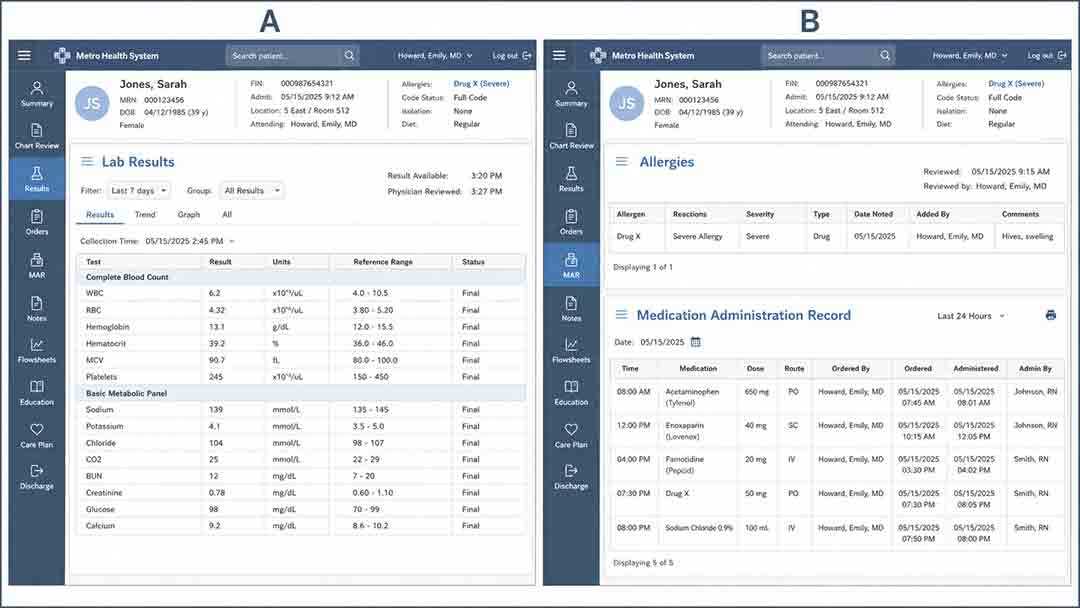
3. Medication administration records, physician orders, pharmacy records, laboratory results, monitoring records, and follow-up treatment records can help reconstruct what happened.
4. An adverse drug event does not automatically prove negligence because some medication-related injuries occur even when treatment was appropriately prescribed and administered. (
psnet.ahrq.gov)
5. Potential compensation depends on the injury, causation, supporting evidence, jurisdiction, and legally recognized damages. No fixed settlement formula applies to every medication-error case.
This guide explains how to distinguish a preventable medication error from an unavoidable adverse reaction, organize the most useful evidence, evaluate causation, document resulting losses, and decide when professional review may be appropriate.
How a Medication Error Becomes a Medical Malpractice Claim
A medication error becomes a potential malpractice issue when the evidence supports more than the existence of a mistake.
The FDA describes a medication error as a preventable event that may cause inappropriate medication use or patient harm while a medication is under the control of a healthcare professional, patient, or consumer. The FDA also makes clear that an error can occur without causing an adverse event. (
fda.gov)
AHRQ’s Patient Safety Network similarly distinguishes medication errors from adverse drug events. An adverse drug event is harm associated with medication exposure, but the existence of harm does not necessarily show that an error occurred. (
psnet.ahrq.gov)
A practical legal framework asks four questions:
Was there an applicable professional standard of care?
Did a healthcare provider fail to meet that standard?
Did that failure cause or materially contribute to the claimed injury under applicable law?
Did the patient experience legally recognized damages?
California Courts, for example, explains that a medical malpractice case generally involves proving that the provider failed to meet the quality of care expected from comparable providers and that the failure caused injury. Expert testimony is commonly required. Other jurisdictions apply their own rules. (
selfhelp.courts.ca.gov)
What Counts as a Medication Administration Error
A medication administration error occurs when a problem arises while medication is being given to a patient.
AHRQ describes the traditional “five rights” of medication administration as the right patient, right medication, right time, right dose, and right route. Modern safety practice also considers documentation, monitoring, communication, and workflow rather than treating those five checks as a complete safety system. (
psnet.ahrq.gov)
Potential examples include giving medication to the wrong patient, administering the wrong drug, using an incorrect dose, delivering medication through the wrong route, or failing to follow an appropriate schedule.
CMS medication-administration materials also identify issues such as incorrect medications, incorrect doses, wrong-route administration, medication given without an order, and certain administration-technique failures in regulated care settings. (
cms.gov)
A deviation does not automatically establish negligent treatment. The relevant question is whether the conduct fell below the professional standard applicable to the circumstances and whether that departure caused harm.
Where Medication Errors Can Occur Before Administration
Administration is only one stage of medication use.
AHRQ describes a medication pathway that includes prescribing or ordering, transcribing, dispensing, and administration. A mistake at an earlier stage can reach the person administering the drug even if that person follows the order as written. (
psnet.ahrq.gov)
For example, a physician could select an incorrect dose.
A prescription could be entered incorrectly.
A pharmacy could dispense a different medication.
The correct medication could be dispensed but administered to the wrong patient.
A case evaluation should therefore determine where the medication process actually failed rather than assuming that the last person who handled the medication necessarily caused the error.
This becomes especially important when multiple healthcare professionals, departments, pharmacies, or electronic systems were involved.
Medication Error vs. Adverse Drug Reaction
A medication error involves a preventable problem in the medication-use process.
An adverse drug reaction can occur even when treatment is provided appropriately.
AHRQ explains that adverse drug events include harm caused by medication exposure, but not every adverse drug event reflects an error. Some reactions are considered nonpreventable when the medication was properly prescribed and administered. (
psnet.ahrq.gov)
The FDA makes a similar distinction. Its medication-error guidance contrasts preventable medication problems with situations such as an unexpected allergic reaction in a patient without a known history. (
fda.gov)
This distinction is essential:
A bad outcome does not automatically equal medical negligence.
If a patient experiences a recognized complication despite appropriate prescribing, administration, monitoring, and response, the injury alone may not establish malpractice.
Evidence That Can Show a Medication Error Occurred
The strongest evidence usually reconstructs the medication process from order to outcome.
Useful records may include the original medication order, electronic prescribing information, medication administration record, pharmacy dispensing record, dose and route documentation, nursing notes, barcode medication administration logs, infusion pump information, laboratory results, vital signs, allergy information, and discharge records.
AHRQ notes that modern medication administration may involve barcode systems, electronic records, automated dispensing technology, and smart infusion pumps. These tools can improve safety but do not eliminate every opportunity for error. (
psnet.ahrq.gov)
The records should help answer specific questions:
Which medication was ordered?
What strength and dose were intended?
What was dispensed?
What was actually administered?
Which route was used?
When was the medication given?
What monitoring followed?
When did unusual symptoms first appear?
The objective is not to collect as much paperwork as possible. It is to reconstruct a reliable sequence of events.
A Four-Link Medication Error Evidence Framework
A practical way to evaluate the available evidence is to divide it into four links.
Link One: The Order
Identify the medication, intended dose, route, frequency, indication, and relevant instructions.
If the original order was incorrect, the investigation may begin at the prescribing stage.
Link Two: The Medication Delivered
Determine what was actually dispensed and administered.
A difference between the original order, pharmacy record, and administration record may help identify where the process changed.
Link Three: The Patient Response
Document what happened clinically after administration.
Relevant evidence may include symptoms, changes in vital signs, laboratory abnormalities, emergency treatment, additional monitoring, medication reversal, or changes in the treatment plan.
Link Four: Causation and Damages
Determine whether medical evidence connects the suspected error to the claimed injury and what measurable consequences followed.
A missing link does not automatically defeat a potential claim. It identifies where further records or expert analysis may be needed.
Why Causation Is So Important
Causation asks whether the alleged medication error actually caused the injury for which damages are being claimed.
This can be more complicated than proving that the wrong medication or dose was given.
Suppose a patient receives an incorrect dose but develops no symptoms, requires no additional treatment, and experiences no measurable injury.
That may still be a significant patient-safety event, but its legal damages analysis differs from a case in which the same error causes a documented complication requiring further treatment.
AHRQ distinguishes medication errors that reach patients without producing clinical harm from preventable adverse drug events that do result in harm. (
psnet.ahrq.gov)
Causation may be especially difficult when a patient already has serious health conditions.
Expert analysis may need to distinguish between consequences of the medication event, progression of an underlying illness, expected treatment complications, and unrelated conditions.
Timing can be relevant, but the fact that symptoms began after a medication was administered does not necessarily establish medical causation.
Real-World Example: Wrong Dose With Documented Injury
Consider a hypothetical hospital patient who is supposed to receive Medication A at a specified dose.
An administration record later indicates that a substantially different dose was given.
Soon afterward, the patient develops an abnormal clinical condition requiring additional monitoring and treatment.
A careful review would not immediately conclude that malpractice occurred.
Instead, it would ask:
What dose was ordered?
What dose was dispensed?
What dose was administered?
Was the administered dose inconsistent with the order?
Was there a clinical reason for changing the dose?
What symptoms or laboratory changes followed?
Did treating clinicians connect those changes to the medication?
Did the patient require additional treatment or a longer recovery because of the event?
If appropriate evidence establishes a negligent dose error that caused additional injury, the facts may support a legal claim depending on applicable law.
If the records instead show appropriate treatment followed by an unavoidable reaction, the conclusion may be different.
This example shows why a potential claim cannot be reliably evaluated from the drug name alone.
What a Patient Should Do After Suspecting a Medication Error
The first priority should be medical safety rather than legal documentation.
Step One — Seek appropriate medical evaluation.
If symptoms are severe, rapidly worsening, or potentially life-threatening, emergency medical care may be appropriate.
For nonemergency concerns, contact the prescribing clinician, treating facility, or pharmacist promptly for professional guidance.
Do not independently stop medication, restart medication, double medication, or otherwise change a prescription solely because an error is suspected unless an appropriate healthcare professional advises doing so.
Step Two — Identify and preserve the medication information.
Keep the bottle, packaging, pharmacy label, written instructions, or discharge medication list when available.
Do not alter labels or discard potentially relevant packaging.
Step Three — Record the timeline.
Note when the medication was prescribed, dispensed, administered, or taken; when symptoms began; and when additional care was sought.
Personal notes can help preserve details but do not replace medical documentation.
Step Four — Obtain relevant medical and pharmacy records.
These records can help determine whether the suspected error appears in the documented medication pathway.
Step Five — Preserve financial records.
If the event results in additional bills, missed work, travel costs, or other financial effects, keep supporting documentation.
Step Six — Seek professional guidance when the injury is significant.
A qualified healthcare professional can address medical concerns. Appropriate legal advice can address filing deadlines, evidence requirements, and whether the available facts may support a claim.
Reporting Medication Safety Problems
The FDA encourages patients, consumers, healthcare professionals, and manufacturers to report medication errors and circumstances that could cause medication errors through its safety-reporting systems.
The FDA uses these reports as part of postmarket monitoring and may respond to recurring safety concerns through labeling changes, safety communications, packaging changes, or other regulatory measures. (
fda.gov)
A regulatory safety report is different from a civil lawsuit.
Reporting a medication problem may contribute to broader safety monitoring.
A legal claim focuses on whether the claimant can establish the elements required under applicable law.
One process does not automatically determine the outcome of the other.
Medication Errors That May Require Closer Review
Situations involving a clear medication discrepancy or significant patient consequence deserve careful review.
Examples may include administration of medication intended for another patient, a dose materially different from the documented order, administration through the wrong route, administration despite relevant documented allergy information, or failure to respond appropriately after signs of a medication-related problem appear.
Some medication classes require particularly careful handling because errors can have serious consequences.
AHRQ identifies anticoagulants, insulin, opioids, and chemotherapy agents among medication classes commonly considered high-alert medications in patient-safety practice. (
psnet.ahrq.gov)
Medication type alone, however, does not prove negligence.
The core questions remain: What should have happened, what actually happened, why did the difference occur, and what harm resulted?
How Damages Are Evaluated After a Medication Error
Damages are legally recognized losses attributed to a proven injury.
Depending on applicable state law and the evidence, potential damages may involve additional medical expenses, lost income, future financial losses, and other legally recognized consequences.
The existence of a medication error does not determine the amount of damages.
Consider two patients who receive the same incorrect dose.
One patient is monitored promptly and experiences no injury.
The other develops a documented complication requiring additional treatment and time away from work.
The medication discrepancy may be similar, but the resulting damages evidence is substantially different.
That is why the existence of an error should be analyzed separately from the consequences of the error.
Documenting Additional Medical Costs and Lost Income
Separate treatment that would have occurred anyway from treatment allegedly required because of the medication-related injury.
Suppose a patient was already hospitalized before the medication event.
After the event, additional testing, monitoring, treatment, or an extended hospital stay becomes necessary.
It would not automatically be appropriate to attribute the entire hospitalization to the medication problem.
Instead, documentation should identify the additional care allegedly caused by the event.
That may include extra testing, added hospital days, follow-up appointments, rehabilitation, medication, or other treatment.
This distinction produces a clearer and more defensible economic analysis.
How Can Lost Income Be Evaluated?
Lost income should be tied to the period in which the medication-related injury actually interfered with employment.
Relevant documents may include pay stubs, payroll records, employer statements, tax records, work schedules, and medically supported work restrictions.
Self-employed patients may need invoices, contracts, bank records, tax returns, and accounting information.
The key is to connect the period of missed work to the injury rather than simply presenting annual earnings.
If lasting limitations reduce future earning ability, a separate future-loss analysis may be necessary.
The resulting financial figures do not automatically determine the value of the settlement.
When Expert Review Matters
Expert review can be important when a dispute involves professional medical judgment, standard of care, or causation.
California Courts explains that a person suing a healthcare provider over medical treatment will almost always need expert testimony addressing the applicable standard of care, whether that standard was breached, and whether the breach caused injury. (
selfhelp.courts.ca.gov)
Requirements differ among jurisdictions, so California should not be treated as a nationwide procedural rule.
Expert analysis may be particularly useful when medication dosing depends on complex clinical factors, several providers participated in the medication process, the original order is disputed, or significant preexisting conditions complicate causation.
Expert analysis may help determine whether a bad outcome reflects negligent care, an unavoidable complication, or another cause.
Common Mistakes and Claim Reliability Review
The first mistake is assuming that every medication error equals malpractice.
The FDA recognizes that a medication error can occur without producing patient harm. (
fda.gov)
The second mistake is assuming that every medication injury resulted from an error.
AHRQ distinguishes preventable adverse drug events from reactions that may occur despite appropriate treatment. (
psnet.ahrq.gov)
The third mistake is focusing only on the person who administered the medication.
The underlying problem may have occurred during prescribing, order entry, transcription, dispensing, or another earlier stage. (
psnet.ahrq.gov)
The fourth mistake is relying mainly on memory.
Medication administration records, pharmacy records, laboratory results, and clinical notes usually provide a stronger basis for reconstructing events.
The fifth mistake is overlooking legal deadlines.
Medical malpractice filing deadlines and pre-suit requirements vary by jurisdiction. California Courts, for example, describes specific medical malpractice deadlines and notice requirements, illustrating why the rules of the actual jurisdiction must be checked rather than inferred from general online information. (
selfhelp.courts.ca.gov)
A Five-Question Claim Reliability Review
After organizing the evidence into the four-link framework above, the following review can help test whether the available evidence supports each part of the potential claim.
Question One — Is the alleged error identifiable?
Can the records establish what was ordered and what actually happened?
Question Two — Is there a meaningful departure to evaluate?
A difference in treatment does not automatically establish negligence. The issue is whether appropriate professional care required something different.
Question Three — Is there documented patient harm?
Symptoms, additional treatment, testing, hospitalization, or other consequences should be distinguished from an error that produced no injury.
Question Four — Is there evidence connecting the error to the harm?
Timing can support an investigation, but medical causation may require more than chronological proximity.
Question Five — Are the damages documented?
Medical expenses, income losses, additional care, and other claimed consequences should be supported by appropriate records.
If the evidence addresses all five questions, the potential claim is easier to evaluate.
If one answer is missing, that identifies the area requiring further investigation rather than simply more paperwork.
When to Consider a Medical Malpractice Lawyer and State-Specific Rules
Professional legal review may be appropriate when a suspected medication error appears to have caused significant injury, additional hospitalization, lasting impairment, substantial financial loss, or death.
It may also be useful when several healthcare providers or organizations were involved, responsibility is unclear, important records appear inconsistent, or filing deadlines may be approaching.
A medical malpractice lawyer or medical malpractice attorney can evaluate state-specific procedural requirements, potential defendants, expert-review requirements, available damages, and filing deadlines.
Depending on the facts, a medication error lawyer or prescription error attorney may focus on prescribing, dispensing, pharmacy, or administration issues. The appropriate legal theory depends on where the medication process failed and which law applies.
No medical malpractice settlement or compensation outcome should be treated as guaranteed based solely on an initial description of a medication event.
How Do State-Specific Rules Affect a Claim?
Medical malpractice rules are not uniform across the United States.
State law can affect filing deadlines, pre-suit procedures, expert requirements, available damages, evidence rules, and other parts of a case.
California provides one useful example.
The California Judicial Branch publishes official Civil Jury Instructions, including the 2026 edition of the Judicial Council of California Civil Jury Instructions. These materials illustrate why current jurisdiction-specific authority matters when evaluating negligence, causation, and damages. (
courts.ca.gov)
California’s rules should not be applied automatically to a case arising elsewhere.
The law governing the actual jurisdiction should control the legal analysis.
Legal Information Notice
This article provides general educational information about medication errors and medical malpractice claims in the United States. It is not legal advice and does not create an attorney-client relationship.
This material is also not medical advice.
Medical treatment decisions should be discussed with an appropriate healthcare professional. Medical malpractice standards, filing deadlines, notice requirements, expert-witness rules, damage rules, and available remedies vary by state and by the facts of each case.
Practical Conclusion
A suspected medication error should be evaluated as a chain of evidence rather than treated as automatic malpractice.
Start with the medication order.
Determine what was actually dispensed and administered.
Document the patient’s response.
Then evaluate whether appropriate medical evidence connects a preventable departure from professional care to an actual injury and measurable damages.
For a suspected medication error without injury, the issue may primarily involve patient safety and reporting.
For an adverse reaction after appropriately delivered treatment, the presence of harm does not automatically prove negligence.
For a documented wrong-drug, wrong-dose, wrong-patient, or wrong-route event followed by significant injury, preserving records and obtaining appropriate medical and legal review may be reasonable.
Frequently Asked Questions, Conclusion, and Sources
Does giving the wrong medication automatically prove medical malpractice?
No. Giving the wrong medication may be important evidence of an error, but a legal claim generally also requires sufficient evidence regarding the applicable standard of care, causation, and damages. The FDA recognizes that medication errors can occur without causing patient injury. (fda.gov)
Can a patient have a medication injury without anyone being negligent?
Yes. AHRQ distinguishes nonpreventable adverse drug reactions from preventable medication-related harm. A patient may experience an adverse reaction even when a medication was appropriately prescribed and administered. (psnet.ahrq.gov)
What records are most important after a suspected administration error?
Important records may include medication orders, administration records, pharmacy records, nursing notes, allergy information, laboratory results, vital signs, infusion records when relevant, discharge documents, and follow-up treatment records. The most useful documents depend on where the suspected error occurred.
Can a pharmacy error lead to a legal claim?
Potentially, depending on the facts and applicable state law. AHRQ identifies dispensing as a distinct stage in the medication pathway. Evaluation may require comparing what was prescribed, what was dispensed, what the patient received, and whether any difference caused injury. (psnet.ahrq.gov)
How is compensation evaluated after a medication injury?
There is no universal formula. Potential damages depend on the proven injury, additional medical care, income loss, future consequences, applicable law, and other case-specific facts. The existence of a medication error alone does not determine the value of a settlement.
How quickly should a possible medication malpractice case be reviewed?
Prompt review can be important because medical records may need to be obtained and filing deadlines vary by state. California Courts, for example, applies specific deadlines and notice rules to medical malpractice cases, while other jurisdictions use different requirements. The correct deadline must be determined under the law governing the particular case. (selfhelp.courts.ca.gov)
Sources
U.S. Food and Drug Administration, Medication Errors Related to CDER-Regulated Drug Products. FDA explains medication-error terminology, distinguishes errors from certain nonpreventable adverse reactions, and describes medication-safety monitoring. (fda.gov)
Agency for Healthcare Research and Quality Patient Safety Network, Medication Errors and Adverse Drug Events. AHRQ PSNet distinguishes medication errors, preventable adverse drug events, potential adverse drug events, and nonpreventable adverse reactions and describes the medication-use pathway. (psnet.ahrq.gov)
Agency for Healthcare Research and Quality Patient Safety Network, Medication Administration Errors. The resource discusses medication-administration safety, the traditional five rights, workflow risks, barcode administration, smart pumps, monitoring, and high-alert medications. (psnet.ahrq.gov)
Centers for Medicare & Medicaid Services, Medication Administration Observation. CMS materials identify medication-administration issues reviewed in regulated care settings, including incorrect medication, incorrect dose, wrong route, and administration without an appropriate order. (cms.gov)
California Courts Self-Help Guide, Suing a Healthcare Provider. The official Judicial Branch resource explains special procedural rules applicable to medical malpractice litigation and the common role of expert evidence concerning standard of care and causation. (selfhelp.courts.ca.gov)
Judicial Branch of California, Civil Jury Instructions Resource Center. The Judicial Council publishes the 2026 Edition of the California Civil Jury Instructions, illustrating the importance of consulting current jurisdiction-specific authority when evaluating negligence and damages. (courts.ca.gov)
Source Review Date: August 13, 2026